Biomass Storage – Inspired by Nature. Optimized for the Climate.
Carbon removal does not have to be complicated. In fact, one of the most effective solutions is already happening all around us.
Trees remove CO₂ from the atmosphere every day. Through photosynthesis, they transform carbon into solid biomass: trunks, branches, roots. Nature has perfected this process over millions of years. Biomass storage simply builds on that principle.
The trees do the hard work. Our job is to make sure the captured carbon stays out of the atmosphere.
From natural growth to permanent storage
In a natural forest, carbon is constantly cycling. As trees grow, they bind CO₂. As they decay or burn, that carbon is released again. The system remains in balance.
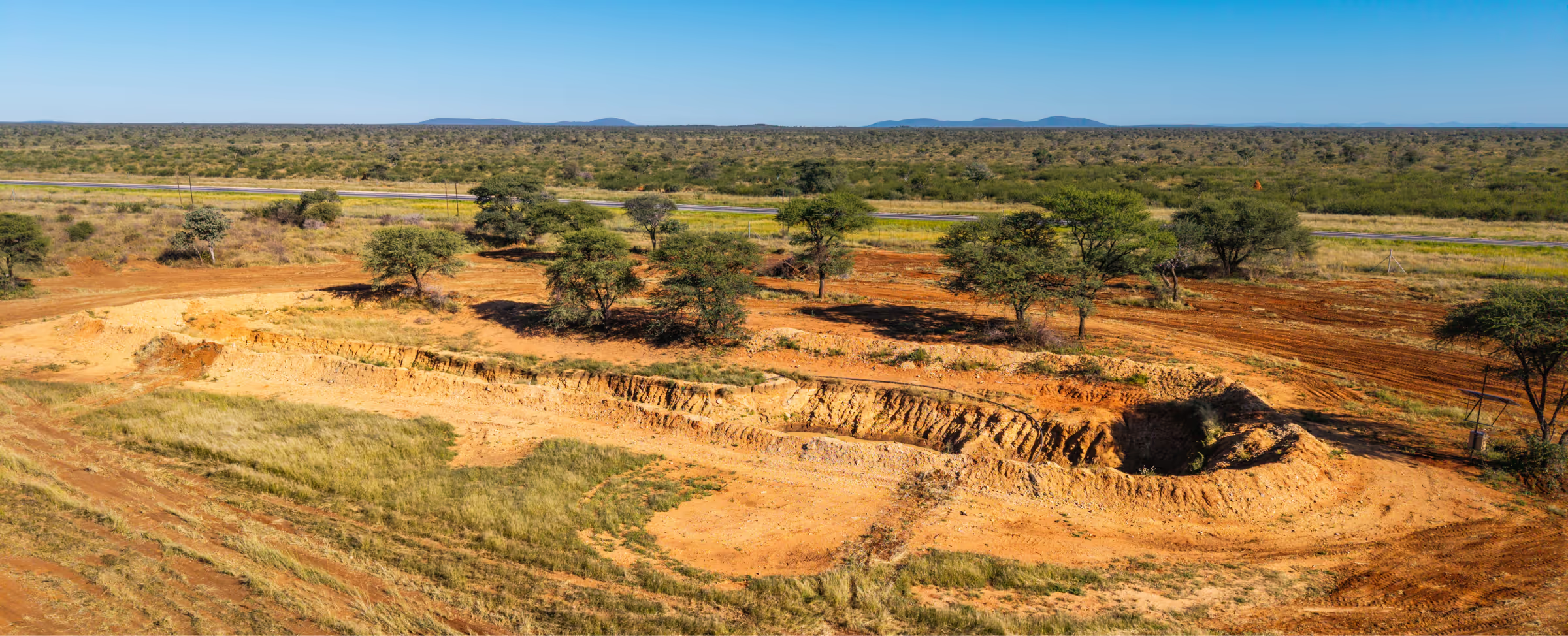
Biomass storage intercepts this cycle. Instead of allowing woody biomass to decompose or be burned, we transfer it into engineered underground storage systems designed for long-term carbon stability. By doing so, we turn short-term biological storage into durable carbon removal.
The core scientific challenge is decomposition. Organic material breaks down when exposed to oxygen, moisture, and nutrients. To prevent this, our storage design ensures:

Oxygen-free
Oxygen-free conditions to stop aerobic decomposition

Minimal moisture
Minimal moisture and nutrient availability to suppress anaerobic processes

Stable containment
Stable physical containment using established construction materials
The result is a controlled environmentwhere biological activity is drastically reduced and carbon remains lockedaway. Our projects are certified for 100 years of permanence by Puro.earth.Based on field data and environmental conditions at our sites, we expect actualstorage times to extend far beyond that - potentially for centuries.
Why woody biomass is ideal for long-term storage
Not all biomass behaves the same. Woody biomass is particularly well suited for durable carbon storage because of its high lignin content and dense structural composition. Lignin is a complex, highly resistant biopolymer that gives wood its rigidity and natural resistance to microbial degradation. Compared to leaves, grasses, or agricultural residues, wood decomposes far more slowly, even under natural conditions.
History provides compelling evidence. Entire cities such as Venice and Amsterdam are built on wooden foundation piles that have remained structurally stable for centuries underlow-oxygen, water-saturated conditions. In extremely dry environments, such asdesert regions, wood can persist for hundreds to thousands of years. Archaeological findings regularly uncover buried wooden structures that havesurvived long time periods when protected from oxygen and moisture.
These examples demonstrate a simple but powerful principle: When environmental conditions limit biological activity, wood can remain stable for very long timescales.
Biomass storage applies this principle deliberately and systematically.
When environmental conditions limit biological activity, wood canremain stable for very long timescales. Biomassstorage applies this principle deliberately and systematically.
The simplest form of carbon removal
Biomass storage is one of the mostintuitive and energy-efficient carbon removal methods available. Unlike engineered solutions that must first capture CO₂ from ambient air, we rely on aprocess that has already happened: nature has concentrated atmospheric carboninto solid form. We simply secure it.
Approximate energy footprint per tonne of CO₂ removed:
In addition, during biochar production, roughly 50 percent of the carbon contained in the original biomass is released during pyrolysis. Biomass storage preserves the majority of the captured carbon instead of converting and partially losing it.
This makes biomass storage not only technically straightforward, but also highly efficient from an energy and carbon retention perspective.
Turning waste biomass into climate impact
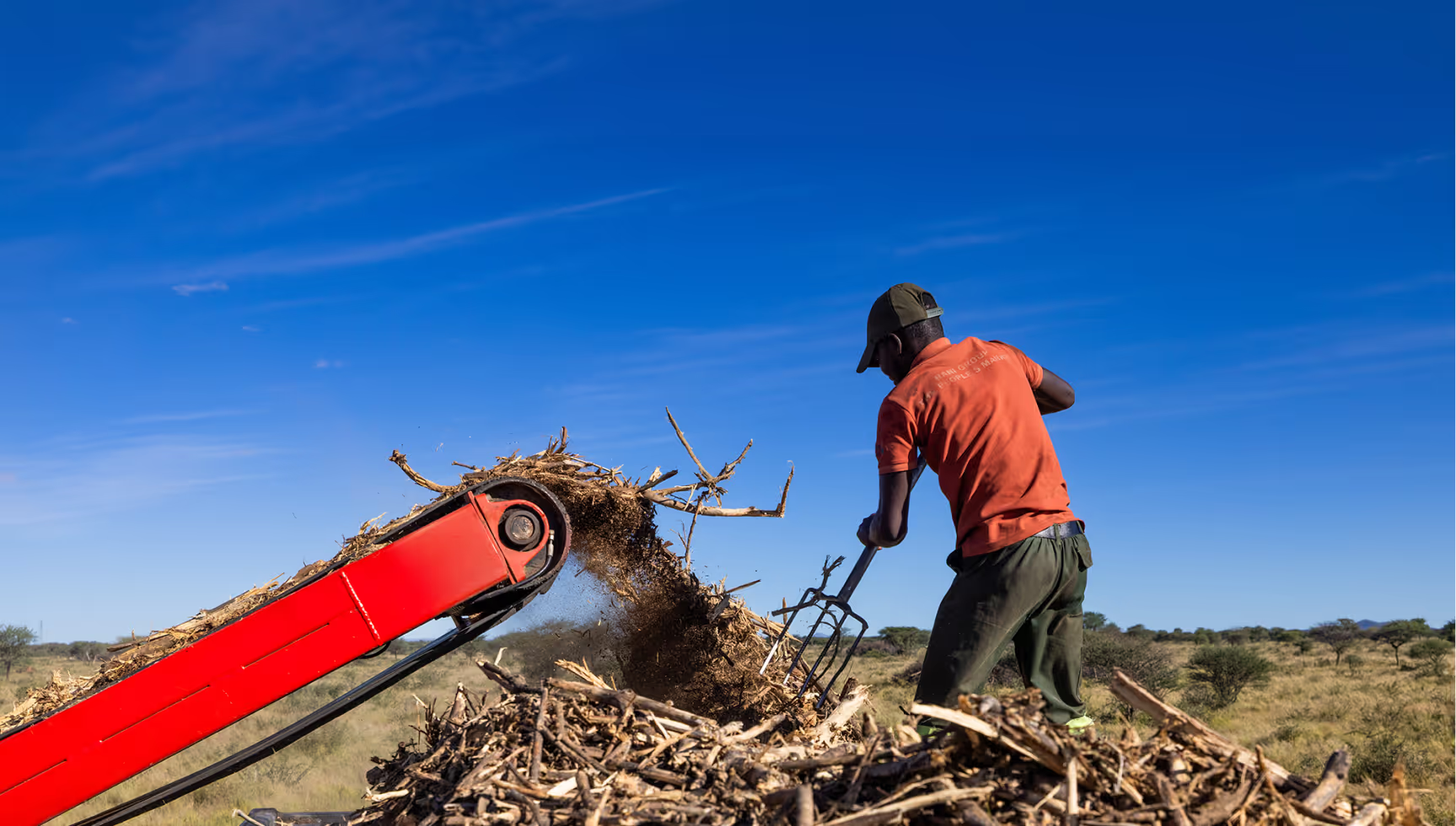
We use residual and waste biomass that would otherwise decompose, burn, or remain unused, including invasive woody species, forestry residues, and sawmill byproducts.
This creates multiplebenefits:
- Permanent carbon removal
- Ecosystem regeneration through the removal of invasive plants
- Additional income streams and value creation inrural regions
By working with landowners, forestry partners, and local communities, we ensure that climate protection aligns with ecological restoration and economic resilience.

Science-driven, data-backed
At Carbonsate, biomass storage is not atheoretical concept. It is an actively developed, monitored, and continuouslyimproved technology.
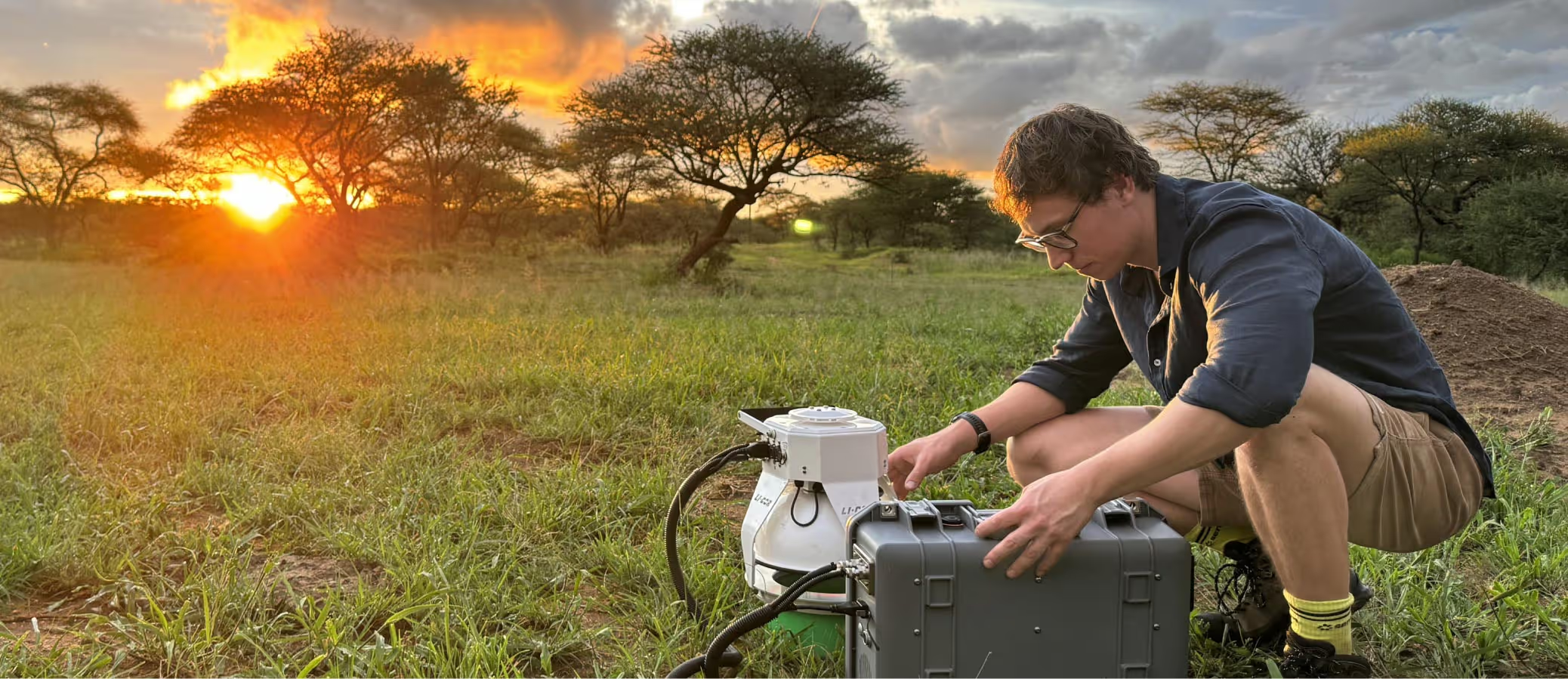
We operate our own monitoring, reporting,and verification (MRV) system based on self-developed sensor technology. Oursystems continuously measure key environmental parameters within the storagebody to ensure stability and detect anomalies early.
Beyond certification requirements, we conduct ongoing research at our sites to deepen the scientific understanding oflong-term biomass behavior under controlled conditions. This research strengthens the durability claims of our projects and helps us refine storage design, materials, and monitoring approaches.
Our ambition is not only to deploybiomass storage at scale, but to set the scientific and technical benchmark forthe field.
Questions We Often Get About Biomass Storage
Biomass storage is a form of durable carbon removal. It keeps carbon that plants have already taken from the atmosphere stored so it does not return. This differs from many offsetting approaches, which focus on avoiding or reducing future emissions rather than removing existing carbon from the atmosphere.
Carbon removal from biomass storage is measured based on the carbon content of the stored wood and monitored over time. Storage conditions are continuously tracked using sensors to ensure the integrity of the site. Measurement, reporting, and verification follow a science-based methodology and are independently reviewed.
Carbon removal credits are issued ex post, after storage has been implemented and verification requirements have been met. This means credits represent carbon that has already been stored and monitored, not future promises. Issuance follows defined standards and independent verification.
Biomass storage is designed for long-term durability. Under the Puro standard, carbon removal is certified for a storage duration of at least 100 years, which reflects the timeframe that is currently verified under established methodologies. The physical storage sites are engineered for long-term stability beyond this period, while scientific research continues to refine how longer durations can be formally accounted for.
If storage conditions were to change, any impact would unfold gradually rather than abruptly. Because the carbon is stored in solid form, there is no risk of a sudden release. Continuous monitoring provides early visibility, and the system is designed so that corrective measures can be taken if needed.
In principle, yes, but there is little incentive to do so. The stored material is low-quality waste wood with no economic value and accessing it would require significant effort because the storage is sealed. Storage sites are monitored, so any disturbance would be detected early and addressed.
Biomass storage is a low-energy and straightforward approach that does not rely on complex industrial infrastructure. It can be deployed wherever suitable waste wood is available, making it scalable and cost-effective across regions. For many buyers, this combination of simplicity, durability, and availability makes it a strong addition to a broader carbon removal portfolio.
Biomass storage projects create local value by working with regional partners and local labor. They turn waste wood into a source of income, create jobs, and reduce harmful practices such as open burning, which contributes to air pollution. In many regions, this means carbon removal is directly linked to better livelihoods and improved local environmental conditions.